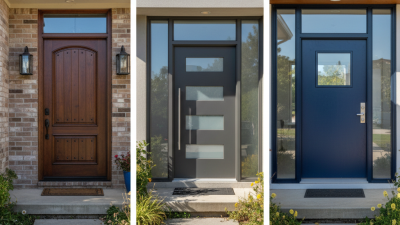
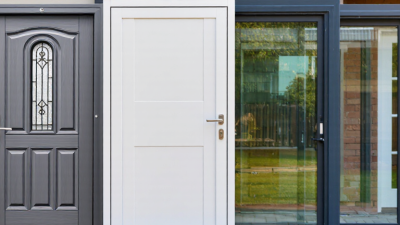
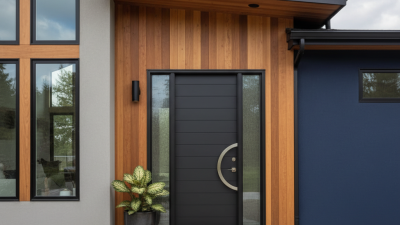
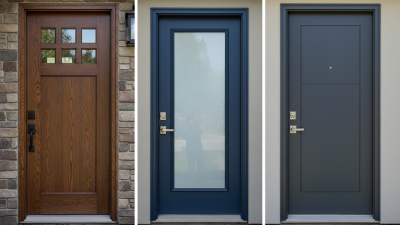
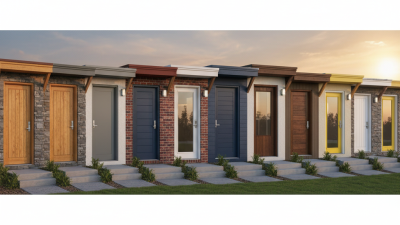
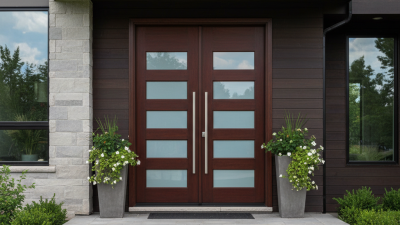
Global sourcing of exterior doors is not a simple price exercise. A door may look identical in two catalogs, yet perform differently in wind, rain, heat, and daily use. For buyers searching “exterior doors doors,” the real task is comparing tested performance, not attractive photographs. The UNEP Global Status Report for Buildings and Construction highlights the sector’s substantial share of global energy use and emissions. This makes thermal performance a purchasing issue, not merely a design preference. A poorly sealed entrance can create drafts, moisture damage, and higher operating costs.
A reliable sourcing review should examine the complete door system. That includes the slab, frame, threshold, hinges, locks, glazing, finishes, and installation method. The U.S. Department of Energy’s Energy Saver guidance emphasizes weatherstripping, proper sealing, and correct installation for reducing air leakage. NFRC performance labels can also help buyers compare U-factor, solar heat gain, and visible transmittance when applicable. However, certification names vary by market. Confirm the test standard and testing laboratory.
Details matter.
Ask suppliers for laboratory reports, production samples, material declarations, warranty terms, and replacement-part policies. Check whether stainless-steel hardware suits coastal exposure. Examine corner joints, drainage paths, gasket compression, and packaging around fragile glass. Freight planning matters too; a damaged threshold can erase a low factory price.
Cost is still important, but it should be measured across the product’s service life. No checklist is perfect. A buyer may overlook local installation skill, maintenance access, or climate-specific corrosion. That uncertainty deserves open review. The strongest sourcing decision combines factory verification, independent documentation, realistic field testing, and clear communication across borders.
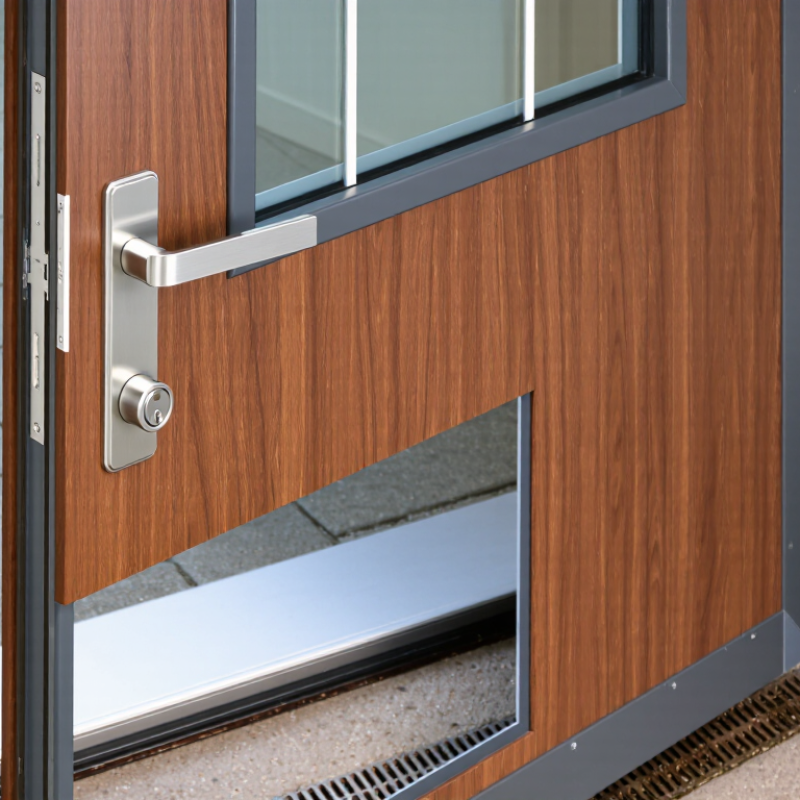
Exterior door sourcing becomes easier when requirements are written before supplier conversations begin. Start with the climate at the installation site, not the factory location. Coastal air demands corrosion-resistant hardware and sealed joints. Cold regions need insulated cores, tight weatherstripping, and low air leakage. In hot, sunny areas, specify finishes that resist fading and thermal movement. Humid projects need careful moisture control. Small details matter.
Building codes define more than appearance. Check required fire ratings, wind-load resistance, thermal performance, accessibility, and safety glazing. Local rules may also control sill height, threshold design, and emergency egress. Ask for test reports, product drawings, and material declarations matching the actual door assembly. A certificate for a similar model is not enough. I have seen projects delayed because the frame passed testing, but the selected hardware did not. Verify the complete opening system.
Measure every opening in three places: width, height, and diagonals. Record wall thickness, frame condition, swing direction, handing, and threshold clearance. Do not assume old masonry is square. It often is not. Leave installation tolerance based on wall material and fixing method. Confirm whether dimensions mean structural opening, frame size, or door-leaf size. A small naming error can create expensive rework. Share drawings with clear units, tolerances, photos, and site notes. Before ordering, review one sample installation with the installer. That step can expose problems no specification sheet shows.
| Requirement | What to Specify | Climate or Project Consideration | Information to Confirm with Supplier | Sourcing Check |
|---|---|---|---|---|
| Door location and exposure | Main entrance, side entrance, balcony, or service door; sheltered or fully exposed | Wind-driven rain, direct sun, salt spray, snow, and frequent temperature changes affect material and finish selection. | Intended installation location, exposure, overhang, drainage details, and whether the assembly includes a frame, sill, and weather seals | Request performance evidence for the complete door assembly, not just the door slab. |
| Cold or heating-dominated climate | Thermal performance target for the complete door assembly; insulated core and effective perimeter seals where appropriate | Lower heat loss and controlled air leakage can improve comfort. Condensation risk also depends on indoor humidity, installation, and surrounding construction. | Tested U-factor or equivalent local thermal rating, test method, product configuration, and applicable operating temperature range | Compare ratings only when the test method and rated assembly are comparable; local energy requirements vary. |
| Hot or cooling-dominated climate | Thermal performance target, suitable glazing specification if glazed, and a finish rated for expected solar exposure | High solar gain and heat transfer may increase cooling loads; intense UV can fade or degrade some finishes. | Thermal rating, glazing U-factor and solar heat gain data where relevant, finish durability information, and tested product configuration | Check local energy-code limits and verify that glazing data apply to the specified glass and frame combination. |
| Humid, rainy, or coastal climate | Moisture-resistant construction, corrosion-suitable hardware, compatible seals, and a maintained protective finish | Persistent moisture can affect wood, coatings, seals, and metal components. Coastal salt exposure can accelerate corrosion. | Material and finish specifications, hardware material or corrosion-resistance documentation, water-penetration test data, and maintenance instructions | Confirm suitability for the actual exposure; no material or finish is maintenance-free in every environment. |
| Wind and impact exposure | Required design pressure, impact protection, or other local hazard performance where applicable | Requirements depend on local wind loads, building height, terrain, opening location, and designated hazard zones. | Test reports or certifications for the exact size, glazing, hardware, frame, and installation configuration | Have the project designer or authority having jurisdiction confirm the required rating; do not assume one rating suits every site. |
| Air and water performance | Required air-leakage and water-penetration performance for the project and applicable jurisdiction | Wind-driven rain and pressure differences make performance especially important on exposed elevations. | Test standard and edition, results, specimen size, and whether testing covered the complete operable assembly | Standards and acceptance thresholds differ by market; verify the local code and project specification. |
| Fire, egress, and accessibility | Fire rating if required; clear opening, swing, threshold, landing, and hardware requirements for the intended use | Requirements depend on occupancy, door location, building type, and local accessibility and fire codes. | Applicable listing or test evidence, clear-opening dimensions, threshold details, hardware schedule, and installation instructions | For example, U.S. ADA standards generally require at least 32 in (813 mm) clear width for applicable door openings, subject to stated conditions and exceptions. Confirm the rules that apply to the project. |
| Opening dimensions | Finished wall thickness; rough-opening width and height; frame outside dimensions; door-leaf size; threshold and floor levels | Existing buildings may have out-of-square openings, uneven floors, or non-standard wall construction. | Dimensioned shop drawing showing frame, leaf, handing, swing, clear opening, installation gaps, and required rough opening | Measure each opening at multiple points and use the supplier’s installation tolerances. Do not derive rough-opening size from a nominal door size alone. |
| Common reference sizes | Record dimensions in millimetres and inches, clearly identifying whether each dimension is nominal, leaf, frame, or rough opening. | Common sizes differ between countries and construction systems; reference sizes are not a substitute for site measurement. | Example reference leaf widths: 762 mm (30 in), 813 mm (32 in), and 914 mm (36 in). Example reference height: 2032 mm (80 in). | Treat these as examples only. Confirm actual market conventions, frame dimensions, clear opening, and code compliance. |
| Handing and hardware | Viewed-from-side convention, inward or outward swing, hinge side, lock preparation, and hardware finish | Swing direction can affect weather exposure, egress, security, and clearance at corridors or landings. | Marked elevation or plan view, hinge and lock locations, compatible hardware dimensions, and keying requirements if applicable | Use drawings rather than “left-hand” or “right-hand” terminology alone, as conventions can differ across markets. |
| Material and maintenance | Door and frame materials, finish system, glazing, seal replacement, and maintenance interval | Material selection should reflect moisture, UV exposure, temperature range, impact risk, and expected maintenance capacity. | Material build-up, coating specification, care instructions, repair process, warranty scope, and availability of replacement seals and hardware | Check that the quoted warranty and maintenance guidance apply to the destination climate and installation conditions. |
| Documents and shipment checks | Approved drawings, test documents, installation guide, packing specification, and inspection criteria | Long-distance transport and storage can expose doors to vibration, moisture, and handling damage before installation. | Final approved schedule, product labels, protective packaging details, spare-parts list, and pre-shipment inspection records | Check local import, labelling, and building-product documentation requirements before placing the order. |