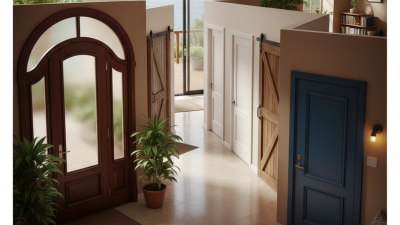
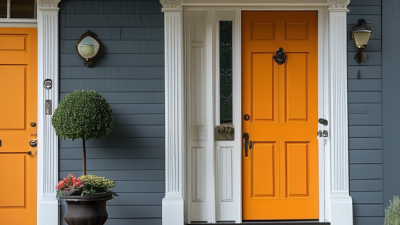
Choosing reliable door specialists can feel deceptively simple. A quick online search may show polished websites, attractive photographs, and confident promises. Yet a beautiful entrance depends on details that pictures rarely reveal. Proper measurements, suitable materials, secure installation, and careful finishing all matter. One loose hinge can become an expensive problem later.
This guide presents seven practical tips for comparing door specialists worldwide. It considers experience, technical knowledge, customer feedback, credentials, warranties, and communication. Look for specialists who explain their recommendations clearly. They should discuss climate, building style, daily use, maintenance, and realistic costs. A dependable professional will inspect the opening before suggesting a replacement. They will also provide a detailed quotation, not a vague figure typed into a message.
Check recent reviews carefully. Look for comments about punctuality, workmanship, cleanup, and after-sales support. Ask for relevant project examples, especially doors similar to yours. Independent trade memberships or recognized certifications can strengthen credibility, but they do not guarantee perfect service. No checklist is perfect. Even experienced homeowners can overlook hidden installation issues.
Reliable specialists welcome reasonable questions. They do not pressure customers into rushed decisions. Their warranty terms should be understandable and specific. Communication should remain clear from the first measurement to the final inspection. These details help separate genuine expertise from persuasive advertising. With thoughtful comparison, you can choose a professional who improves security, comfort, appearance, and long-term value. The best choice is rarely the cheapest quote.
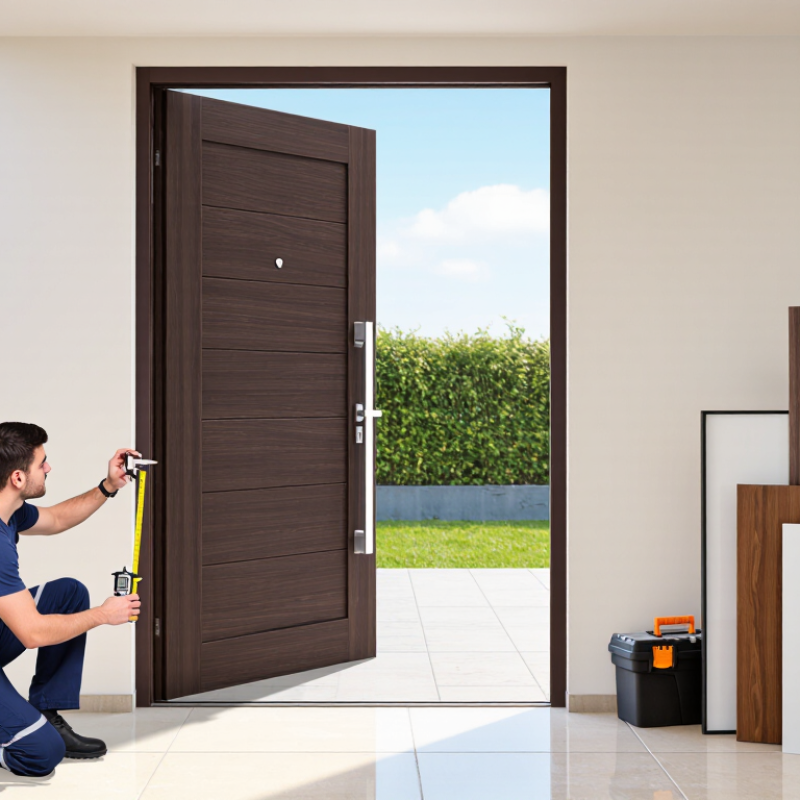
Tip 1—Define the door’s job before contacting specialists. Is it for security, privacy, fire separation, accessibility, weather protection, or daily convenience? Record the opening size, wall material, traffic level, climate, and expected service life. A busy clinic needs different hardware from a quiet apartment.
Tip 2—Set measurable priorities. The U.S. Department of Energy reports that windows can cause 25–30% of residential heating and cooling energy use. Doors may contribute less, but poor seals still create drafts, moisture, and noise. Ask specialists about U-values, air leakage, water resistance, acoustic performance, and maintenance intervals. Tip 3—Check standards early. Fire-rated doors may require tested assemblies under local regulations, while ISO 21542 offers guidance on accessibility. Codes differ worldwide, so a qualified specialist should verify regional requirements instead of promising universal compliance.
Tip 4—Separate essentials from preferences. List your budget, installation deadline, finish, automation needs, and replacement tolerance. Tip 5—Request evidence, not confident language: measured test results, installation qualifications, references, warranty terms, and aftercare procedures. I have seen attractive specifications fail when the frame was fitted poorly. Tip 6—Plan for real users. Measure push force, threshold height, visibility, and emergency access. Tip 7—Leave room for doubt. A neat checklist can still miss salt air, unusual delivery traffic, or future renovation. Recheck those assumptions with an independent building professional before selecting a global door specialist.
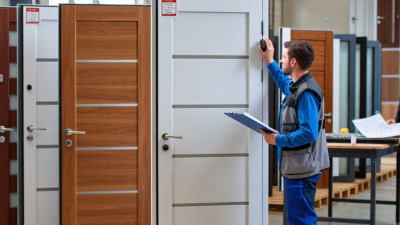
A dependable door specialist should prove competence before discussing price. Ask for current trade licenses, safety training, insurance, and documented qualifications. Requirements differ by country, so verify them with the relevant authority. Membership alone is not enough.
Experience should match your door system. A hospital entrance, fire-rated door, warehouse shutter, and residential lock require different knowledge. Request dated project records, photographs, inspection reports, and two recent client references. The specialist should explain hardware ratings, installation tolerances, and maintenance intervals in clear language. According to NFPA’s Fire Loss in the United States During 2023 report, fires caused about 1.5 million incidents and $16.2 billion in property damage. Correctly installed fire doors are only one part of safety, but poor workmanship can weaken the whole assembly. Small gaps matter.
Service coverage also needs careful checking. Confirm response times, emergency availability, spare-part access, and support after installation. A wide service map can hide thin local coverage. Ask who will actually attend your site. The ISO Survey of Certifications 2023 recorded more than 1.2 million ISO 9001 certificates worldwide, yet certification does not automatically prove field skill. Treat paperwork as evidence, not proof. I would also request a written scope with exclusions, testing duties, and warranty terms. Some specialists may resist this level of detail. That is a warning sign, though not always a final verdict.
Use this practical assessment model to compare door specialists by verifying professional qualifications, experience, service coverage, and after-sales support.
How to use the chart: Give priority to specialists with documented qualifications, relevant installation experience, clear licensing and insurance, broad service coverage, written warranties, verifiable references, and reliable after-sales communication.
7 Tips to Choose the Best Door Specialists Worldwide
When comparing door specialists, product quality should be judged beyond photographs and polished brochures. Request material specifications, independent test reports, and warranty conditions in writing. Check the door’s resistance to moisture, impact, corrosion, and repeated daily use. A showroom sample may look excellent, yet weak hinges or poor seals can fail within months. Ask for proof.
Technical expertise becomes visible during the site survey. Skilled specialists measure wall openings, floor levels, swing clearance, and local climate exposure. They should explain installation tolerances in clear language. Ask who performs the installation and how problems are recorded after handover. Reliable teams provide drawings, maintenance guidance, and realistic delivery schedules. Vague answers deserve caution.
Customization should solve practical needs, not merely create attractive variations. Compare available sizes, glazing choices, finishes, hardware, insulation levels, and access requirements. Ask whether custom parts are tested together as one system. A beautiful finish may increase maintenance in coastal or dusty environments. That detail is easy to miss. I would also compare two written quotations with identical specifications. Otherwise, the lower price may simply exclude essential components. Even experienced buyers can overlook drainage, threshold height, or future replacement access. Leave room for correction, because a perfect specification rarely survives an imperfect building site.
| Tip | Evaluation Dimension | What to Compare | Objective Evidence or Benchmark | Recommended Weight | Warning Signs |
|---|---|---|---|---|---|
| 1 | Verify Product Quality | Review the door leaf, frame, seals, hinges, locking system, surface finish, and material specifications. | Look for documented material grades, production tolerances, inspection records, and a clearly defined quality-control process. For external pedestrian doorsets, EN 14351-1 may be relevant in European markets. | 20% | Vague material descriptions, inconsistent specifications, or no documented inspection process. |
| 2 | Check Independent Performance Testing | Compare air permeability, water tightness, wind resistance, thermal performance, acoustic performance, and security performance where applicable. | Request test reports from accredited laboratories. Common references include ASTM E283 for air leakage, ASTM E331 for water penetration, ASTM E330 for structural performance, and EN 1627 for burglary-resistance classification. | 18% | Only internal claims are provided, test reports are expired, or the tested configuration does not match the quoted product. |
| 3 | Assess Technical Expertise | Evaluate knowledge of building codes, structural interfaces, weatherproofing, hardware compatibility, fire requirements, and project-specific risks. | Prioritize specialists who can provide engineering drawings, installation details, specifications, compliance documentation, and technical responses before ordering. | 16% | Technical answers are delayed or incomplete, drawings are unavailable, or responsibility for design coordination is unclear. |
| 4 | Confirm Installation Capability | Compare site measurement procedures, fixing methods, frame-to-wall interfaces, insulation continuity, drainage, adjustment, and commissioning. | Ask for a written installation method statement and evidence of installer training. Installation should follow the product instructions and the applicable local building regulations. | 14% | Installation is treated as an afterthought, site dimensions are not verified, or no handover and adjustment procedure exists. |
| 5 | Compare Customization Options | Review available sizes, opening configurations, materials, glazing, colors, finishes, thresholds, hardware, access control, and accessibility features. | Request a configuration sheet showing maximum and minimum dimensions, permissible weight, hardware limits, available finishes, and any surcharge or engineering restrictions. Accessibility requirements are jurisdiction-specific; a clear opening of approximately 850 mm is a common benchmark in many guidance documents, but local rules must control. | 14% | Custom features are promised verbally, dimensional limits are missing, or modifications are made without updated drawings. |
| 6 | Evaluate Service, Warranty, and Spare Parts | Compare warranty scope, response times, replacement-part availability, maintenance support, and after-sales communication across regions. | Obtain written warranty terms covering finish, hardware, seals, and installation separately where relevant. Check whether commonly replaceable components can be identified and ordered by part number. | 10% | Warranty exclusions are unclear, service contacts are not defined, or spare parts depend entirely on undocumented custom components. |
| 7 | Review Total Cost and Delivery Reliability | Compare product price, engineering, packaging, freight, duties, installation, maintenance, energy performance, and replacement costs. | Use a written quotation with Incoterms, production lead time, delivery milestones, packaging requirements, payment terms, and change-order procedures. Compare total installed cost rather than unit price alone. | 8% | Lead times are not confirmed, logistics responsibilities are unclear, or the lowest quotation excludes installation and compliance documentation. |
Suggested scoring method: Rate each criterion from 1 to 5, multiply the rating by the recommended weight, and compare the resulting weighted totals. Always confirm the requirements of the destination country, project specifications, and applicable building regulations.
When comparing door specialists worldwide, pricing should be clear before any measurement or installation begins. Request an itemized quote covering materials, labor, delivery, removal, taxes, and possible travel fees. A very low price may exclude essential work, such as adjusting the frame or sealing small gaps. Ask whether the specialist has experience with your door type and local building requirements. Experienced professionals explain technical choices without using confusing language.
Review the warranty carefully. It should separate coverage for materials, installation, hardware, and finishes. Check the warranty period, exclusions, repair process, and who pays for transport or labor. Read the exclusions. A long warranty means little if moisture damage, alignment problems, or daily wear are excluded. Keep the invoice, installation date, product details, and photographs in one file. This simple record can prevent disputes later.
Communication is equally important. Notice how quickly the specialist answers, whether estimates arrive in writing, and whether questions receive specific replies. Customer support should remain available after installation, not disappear after payment. Ask for references from recent customers and verify whether complaints were handled fairly. Online reviews can help, but they are not perfect evidence. Even careful buyers miss hidden fees or unclear promises. Leave room for uncertainty, and confirm important details twice before signing.
Choosing the best door specialist worldwide takes more than comparing prices. Start with recent customer reviews from several independent sources. Look for repeated comments about punctuality, workmanship, communication, and aftercare. A single angry review may lack context, but repeated complaints deserve attention. Reviews can be polished, too. Read carefully.
Ask for references from projects similar to yours. Speak with previous clients when possible, and ask whether the final cost matched the estimate. A reliable specialist should explain local safety requirements clearly. Check relevant qualifications, insurance, and registrations where applicable. For fire-rated, security, or automated doors, request product certificates and installation records. Verify important documents with the issuing organization, not only through screenshots. Ask how the door was tested, maintained, and released during an emergency.
The final agreement should describe measurements, materials, hardware, labor, schedule, payment stages, warranty coverage, and possible extra charges. Include who handles repairs, disposal, and unexpected structural problems. I once trusted a verbal promise about completion time. That was a mistake. Put every important detail in writing, including approved changes. The wording may feel tedious. It prevents expensive confusion. Before signing, ask the specialist to explain unclear clauses in plain English. If answers remain vague, pause the decision. A cheaper quote may hide missing safety work or weak aftercare. Your door protects people and property, so reliability matters as much as appearance.