How to Find the Best Tungsten Alloy Manufacturer?
Choosing the right Tungsten Alloy Manufacturer requires more than comparing prices or browsing polished websites. Tungsten alloys vary in density, hardness, machinability, and dimensional stability. A supplier experienced with radiation shielding, counterweights, aerospace components, or industrial tooling should explain these differences clearly. Vague claims are not enough.
Start by examining technical capability. Ask for material grades, tungsten content, binder composition, density ranges, and machining tolerances. Reliable manufacturers can provide inspection reports, sample data, and traceable certificates. They should also explain how powder processing, sintering, grinding, and surface finishing affect the final part. A factory tour, when practical, can reveal whether quality control is real or merely promised. Look for calibrated equipment, documented procedures, and workers who understand your application.
Certifications matter, but they do not replace judgment. Verify relevant quality systems, testing methods, and export documentation through independent records. Discuss minimum order quantities, prototype support, lead times, packaging, and responses to nonconforming parts. A serious supplier will ask about operating temperature, loading conditions, drawings, and expected service life. That is a useful sign.
There is no universal “best” manufacturer. The cheapest quotation may become expensive after rework, delays, or inconsistent density. I have seen technically attractive offers fail because communication was slow and specifications remained unclear. That risk deserves attention. Compare evidence, not promises. Request a small trial order when possible, review the results, and confirm whether the supplier can support future production. A careful choice protects performance, budget, and credibility.
Define Your Tungsten Alloy Requirements and Performance Goals
Finding the best tungsten alloy manufacturer starts with a precise requirement sheet. Before contacting suppliers, define the alloy family, tungsten percentage, binder composition, and product form. State the required dimensions, density, and dimensional tolerances. A vague request for “high performance” can produce mismatched quotations. Define the real working conditions. These details matter.
Set measurable performance goals for the finished component. Include hardness, tensile strength, wear resistance, thermal stability, and corrosion behavior where relevant. Describe operating temperature, applied load, service cycles, and surrounding materials. If the part provides radiation shielding, specify the energy range and required attenuation. Ask which test methods support each claimed value. In my experience, sample parts often reveal machining marks, edge chipping, or unexpected warping. Small details matter.
Evaluate manufacturers through evidence, not impressive wording. Request material certificates, batch traceability, inspection records, and dimensional reports. Confirm that test data applies to the exact alloy grade and production method. Generic data may look convincing but remain unsuitable. Discuss prototype quantities, machining allowances, surface finishing, and packaging conditions. My first draft is rarely complete. A specification can still be wrong. Leave room to revise targets after prototype testing, while documenting every assumption clearly. That honest process makes technical comparisons more reliable.
Evaluate Manufacturer Expertise, Materials, and Production Capabilities
How to Find the Best Tungsten Alloy Manufacturer?
Evaluate a manufacturer’s technical experience before comparing prices. Tungsten alloys require controlled powder selection, uniform mixing, pressing, sintering, and precision machining. The USGS Mineral Commodity Summaries 2024 reported approximately 78,000 metric tons of global tungsten mine production in 2023. China supplied about 63,000 tons. This concentration makes material traceability especially important. Ask for mill certificates, powder lot records, and documented recycling controls.
Materials should match the application, not merely the catalog description. ASTM B777/B777M recognizes tungsten-base alloy density classes from about 17.0 to 18.5 g/cm³. A qualified manufacturer should explain the differences between tungsten-nickel-iron and tungsten-nickel-copper systems. Request data for density, tensile strength, hardness, dimensional tolerance, and surface finish. Small gaps matter.
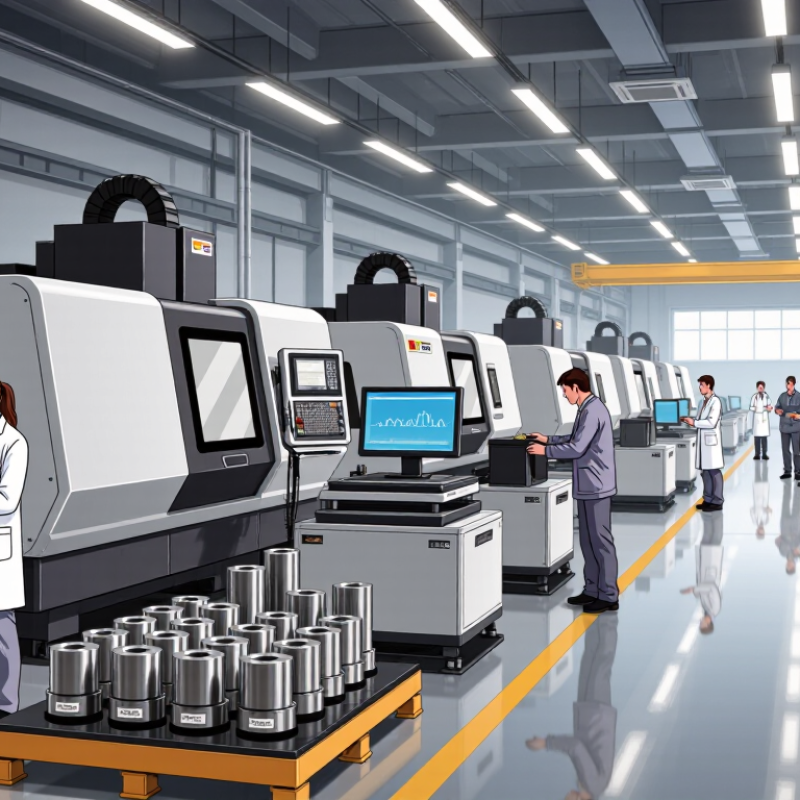
Inspect the production floor when possible. Look for calibrated balances, controlled-atmosphere furnaces, coordinate measuring machines, and sample retention procedures. ISO 9001 certification supports process discipline, but it does not prove alloy performance by itself. Ask for a recent inspection report and a representative test piece. Some manufacturers promise tight tolerances before checking machining distortion. That is a warning sign. My own preference is cautious: approve capability through a pilot batch, then review defects, measurement repeatability, and delivery records before scaling production.
Check Quality Control Systems, Certifications, and Testing Standards
Finding a reliable tungsten alloy manufacturer requires more than comparing prices. In supplier audits, I look for documented process control from powder blending to final machining. ISO 9001 certification shows a structured quality system, but it does not prove every batch is consistent. ISO/IEC 17025 accreditation is more useful when an independent laboratory performs density, hardness, or chemical analysis.
Ask for batch-level certificates, production records, and calibration dates. ASTM B777 provides recognized requirements for tungsten-base, high-density metal products, including density and mechanical properties. Tensile testing should follow a defined method, such as ASTM E8, when applicable. Request actual test values, not only “passed” statements. The USGS Mineral Commodity Summaries 2025 reported approximately 81,000 metric tons of global tungsten mine production in 2024. That supply scale makes traceability increasingly important, especially when material moves across several processing stages.
Tips: Visit the laboratory if possible. Check whether instruments carry current calibration labels. Compare three recent batches for density, hardness, and dimensions. Ask how nonconforming material is isolated. A certificate can look complete while hiding weak sampling. I have seen buyers focus too heavily on certification logos. That is a mistake. The stronger question is simple: can the manufacturer reproduce the same result next month? Also review testing uncertainty, because small measurement differences may affect tight-tolerance parts. Avoid accepting copied reports without lot numbers, signatures, and laboratory identification.
This illustrative sourcing framework assigns recommended evaluation weights to the evidence a tungsten alloy manufacturer should provide. ISO 9001:2015 addresses quality management systems, ISO/IEC 17025:2017 covers laboratory competence, ASTM B777/B777M is used for tungsten-base high-density metal products, and ASTM E8/E8M, ASTM E18, and ASTM E384 support tensile, Rockwell hardness, and microindentation hardness testing. The percentages are evaluation weights, not manufacturer performance claims.
